A fair-trade streaming platform for human-made music. Artists get paid for the time people actually spend listening. Record stores get a seat at the table.
The man who got dropped, then built a streaming platform.
After a breaking and entering arrest, Eagle Johnson wrote his first songs in state custody. Fifteen years later he is building Juniper Stream in East Nashville: a place for artists and musicians to be compensated for the time people actually spend listening to their work, not simply the number of times somebody presses play.
Wilco put him and his band on their Wilco Recommends playlist. The booking team behind Tame Impala and The Black Keys signed them, then dropped them during Covid before a single tour was booked. Lee “Scratch” Perry picked up the pieces and co-produced their track All My Friends, inspiring Eagle to start a label. He paid for the rest the unglamorous way. Restaurant shifts, many of them in sushi restaurants, and pedicab rides in downtown Nashville. No venture round. No wealthy benefactor. One shift, one ride, one recording at a time.
I could spend the rest of my life complaining about what's wrong with music streaming, or I could fix it and help give artists like me a fighting chance.
Eagle Johnson · Founder Photo by: Jason Thrasher
The proposition
Paid by the time, not the click.
Artists deserve ownership.
A song is not a play count. The time a listener gives a record should be what the record is paid for.
Record stores deserve a seat.
Streaming should point back to record stores, not cut them out of the streaming economy.
Listeners deserve a real connection.
A human catalog, chosen by people, not algorithms in a sea of slop.
What streaming broke
Three habits Juniper refuses.
01
The pro-rata pool
Most services dump every subscription into one pot and pay by total plays. An afternoon with one independent record counts the same as thirty songs skipped after half a minute. A million people skipping a song after 30s looks like that artist has a million fans. They don’t, and these sort of misleading numbers can cause labels and managers big problems. A million people averaging 50% of their listening time on a song is a real measure of fans.
02
The anonymous warehouse
Platforms launched with every major-label catalog they could license, then asked artists to compete with it. Now 100,000 to 150,000 new tracks are uploaded across global streaming services every day, driven by independent and AI-generated content. Juniper starts with the great records its own community made and aims to be a trusted hub for good music. Not all the music that has ever been made in the entire universe.
03
The closed door
For recording artists, record stores and streaming platforms are the gallery. AI-generated music does not belong on the wall next to work made by human intention, struggle, and expression—in our opinion. Artists deserve a say about whether their music sits on a playlist next to AI-generated music or not.
02 — The model
Listening Time Payouts.
There is a dirty secret in music streaming that most listeners wouldn't be happy about. You pay $13 a month for a music streaming subscription. According to the going royalty rates, this equals about 2,000 to 3,000 plays a month. The problem is, you and most other music streamers only stream about 300 songs a month. This is only about $1.50 a month worth of listening according to the major streaming rates, yet you pay $13 a month for the service. Is the difference going to the artists you listen to? No. Is it going back to you? Also, no. I could drone on about where it goes, but I'd rather focus on where it should go. To the artists you listen to.
Pay per stream counts every press of play as the same thing, then pays from one shared pool. A skip and a full album can look alike, and a bot can add presses. The work of sitting with a record never shows up in the count.
For an artist, the meaningful number is time spent with the record. Musicians should be paid for the time people actually spend listening, not for the number of times somebody presses play—and listeners should know where their money is going.
With Juniper your membership is split by the time you actually spend listening. On a $10 membership, $8 goes only to the artists you listen to, divided by how long you listened. Half your listening is half of that $8, whether it is 2 songs out of 4 or 4,000 out of 8,000.
An example of one listener. The circles are share of time, and of the $8.
Patronage
Support what you actually play. Pick your level of patronage.
How much do you want to pay? Do you love music and wish you could pay your favorite artists more? That's possible here. If you aren't ready to become a patron of the arts yet, you can still listen, but we'll bug you until you're inspired to become a paying patron.
While an album is playing, Juniper shows which independent shops have the physical record in stock closest to the listener's preferred zip code. Artists, labels, and stores keep that inventory current through Record Store Helm.
The point is a walk to the shop, not another online purchase. Imagine having a magic moment listening to a record, then seeing that it's available down the street from you at a real-life record store.
The opening shelves come from Young World Records, the label Eagle built around music he makes with friends, plus East Nashville artists he's met along the way.
Right now, Juniper Stream is more like a small record store slowly bringing on great records one by one. But, who knows, maybe there will be a Spotify exodus and we’ll see some rapid growth soon.
04 — The path
From a hospital room to a company.
2010
The first songs
After a head injury, Easter night, and three months in Duval County Jail, he spends six months in a state hospital. A compassionate exception lets him have a guitar and paper. He writes his first songs there, teaching himself to sing and play again.
Memphis
Zeke Johnson
He finds a mentor in Zeke Johnson, a Delta blues musician who played with Mississippi Fred McDowell, Bukka White, and Furry Lewis. Still a rookie, Eagle produces his teacher’s first recordings at Ardent Studios, and takes the Johnson name after a dream says he'll be known as Eagle Johnson.
Nashville
Tennessee Beach
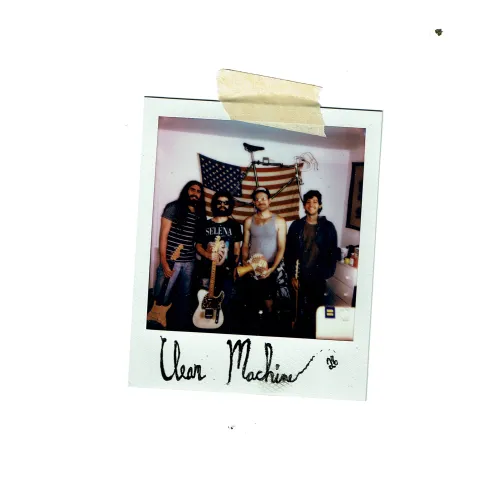
He forms the band Clean Machine and makes a debut with Billy Bennett, the former UGA kicker who toured with MGMT and engineered at Bomb Shelter studios. The record comes out to almost no one. Ten songs, and the people who believed in them.
Then
The industry notices
Wilco puts him on their Wilco Recommends playlist. Paste and HuffPost give him glowing reviews. Pat Sansone calls his music smart, soulful, and a little dangerous. The booking team behind Tame Impala and The Black Keys signs him. The first billing is a sold-out Bowery Ballroom show in NYC.
2020
The door closes
COVID stops the tour before it is routed. The agents who signed him leave for CAA and take the artists already making big money. Eagle does not make the cut. An apology email. His name comes off the site.
After
Young World, then Juniper
Lee “Scratch” Perry co-produces and mixes a Clean Machine track from Switzerland. That vote of confidence inspires the formation of Young World Records. The label becomes the experiment. Juniper is the answer: a platform with artist-approved bylaws, a logical payout model, and a catalog a person can actually trust is good (and not AI).
What they said about his music
It’s fucking great.
Smart, soulful, and a little bit dangerous.
Packs more confidence and swagger into these ten songs than we’ve heard in some time.
This is like kinda Neil Young on the beach mixed with some Paul Simon and Dr. Dog. I’m loving it.
I left that night not just a fan, but an advocator. Go see Eagle Johnson & Clean Machine any chance you get!
05 — The guardrails
A constitution, not a vibe.
Juniper is a Public Benefit Corporation. The operating bylaws were reviewed and approved by 33 artists, musicians, producers, and other members of the creative community. They are meant to bind whoever runs the company next, the way a constitution outlasts an administration.
The company is modeled on mission-driven businesses like Dr. Bronner’s, Patagonia, and Ben & Jerry’s. Profit is allowed. Abandoning the mission is not.
AI is welcome at Juniper as a tool that helps artists get their music into the world—just not as the artist itself.
The partnership reflects a broader belief behind Juniper: artists should have a say in what happens to their work, not just when somebody streams it, but when somebody uses it, copies it, feeds it into a machine, or if they want it on the same playlist as AI music.
VeriTune
Used to check for AI-generated music, so the catalog can remain human made. Professor Jian (Jack) Liu, who directs the MoSIS Lab at the University of Georgia and founded ArtyShield, is Juniper’s AI-detection partner.
MusicShield
Digitally embeds a signal into a recording humans cannot hear, meant to disrupt AI training systems like the ones Sono uses. The work builds on HarmonyCloak, Liu’s 2024 research project. Coming to Juniper soon…
Not a ban on tools
AI helped build this platform. It can route a tour, keep the books, or help code custom operational tools.
06 — Partners
From a lab to the catalog.
ArtyShield is the company Juniper partners with for AI detection. Jian (Jack) Liu founded it in August 2025. He is an associate professor in the School of Computing at the University of Georgia, where he directs the Mobile Sensing and Intelligence Security (MoSIS) Lab. He was one of the 33 people who approved the bylaws. He holds a Ph.D. from Rutgers University and was an assistant professor at the University of Tennessee, Knoxville.
His research covers trustworthy AI, computational sensing, AR/MR, HCI, and intelligent fitness. The work includes TrustLLM, HarmonyCloak, wireless and acoustic sensing, and federated learning privacy. He holds 7 U.S. patents. He is listed among Stanford’s World’s Top 2% Most Cited Scientists and received the University of Tennessee’s Professional Promise in Research and Creative Achievement Award in 2025. The protection work started as HarmonyCloak, research he led at the University of Tennessee. MusicShield is licensed from that work through the UT Research Foundation.
Professor Jian (Jack) Liu | ArtyShield CEO and Eagle Johnson | Juniper Stream Founder Photo by: Jason Thrasher
Sets the partnership. He turned the lab’s research into VeriTune, which checks a track, and MusicShield, which makes a recording harder for AI systems to train on.
Ph.D. student in trustworthy AI at the University of Georgia, under Liu. She works on the research behind the products.
Advisors include David Barbe, who directs the music business program at the University of Georgia, and Bob Vanderhoff of the UT Research Foundation. ArtyShield
07 — Investors
Fake the play. Miss the payout.
The problem
Rolling Stone has estimated that fake streaming costs the music industry over $500 million a year. On a play-count system, that loss starts at the button. A bot can trigger it, and the payout follows the count.
The solution
Juniper pays by listening time. The number of streams is not a factor. Half the listening is half the payout, whether that is 2 songs out of 4 or 4,000 out of 8,000. Fifty percent is fifty percent. A million plays still cannot take more than that listener’s whole share: $8 of a $10 membership. Bots can inflate a count. They cannot game the payout.
Fairness for artists. Security for investors.
08 — Growth
A revolving door of music fans.
Nashville does not have one audience that stays put. In 2025, Davidson County drew 17.4 million visitors. They spent $11.6 billion, about $31.8 million a day, and more than a third of all visitor spending in Tennessee.
They come looking for music, and not only for country. Country is the front door. The rest of the house is songwriter nights, rock, soul, and the records made in rooms like East Nashville. The crowd turns over every weekend. The appetite for a band in a room does not.
This is our initial target: Nashville tourists. We're bottling all the great records being made by the up-and-coming artists here first, and giving them one central discovery place. And the best part, the tour comes to us.
Onboarding starts in East Nashville, with the records made around here over the last decade. At the moment there is no central location to hear what’s been going on here. You almost have to live in East Nashville to know how much great music has come from this zip code. The first phase of Juniper is to be a place to hear a snapshot of the sound and soul of East Nashville. From December through May, Eagle plays a Sunday happy-hour onboarding series at Vinyl Tap. The intent is to play some music, add some music, and spread the word.


 RawClean Machine
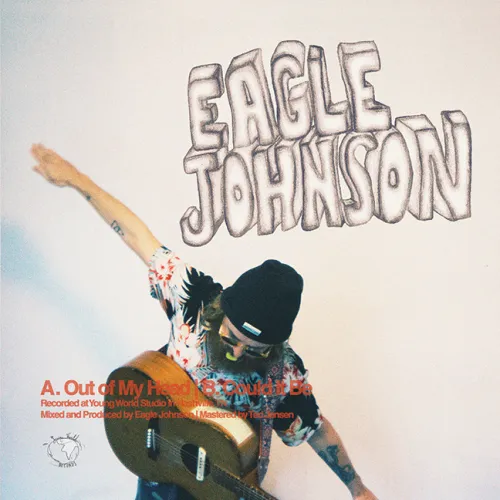 The SwellEagle Johnson
 Tennessee BeachClean Machine
 Wild HeartEagle Johnson
 Cool DeadJustin & the Cosmics
 In DaylightPaul DeFiglia
 Come Gather Around ChildrenZeke Johnson
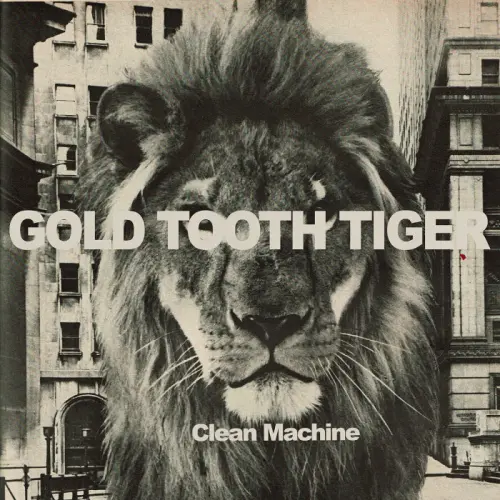 Gold Tooth TigerClean Machine
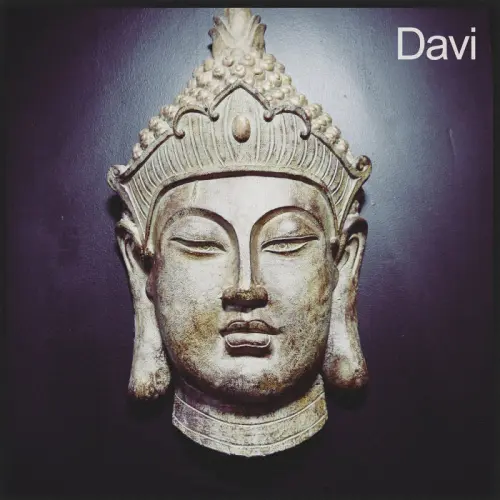 DaviCraig Davis
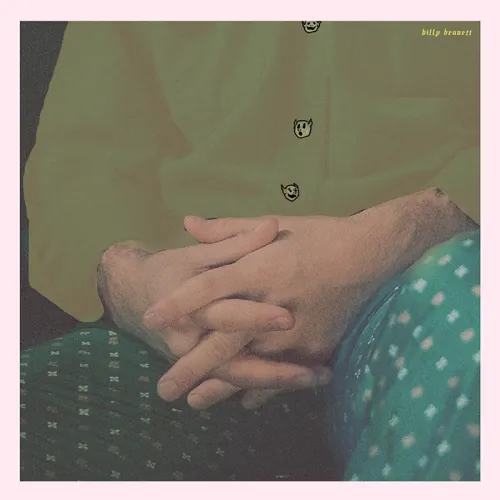 Moral CalculusBilly Bennett
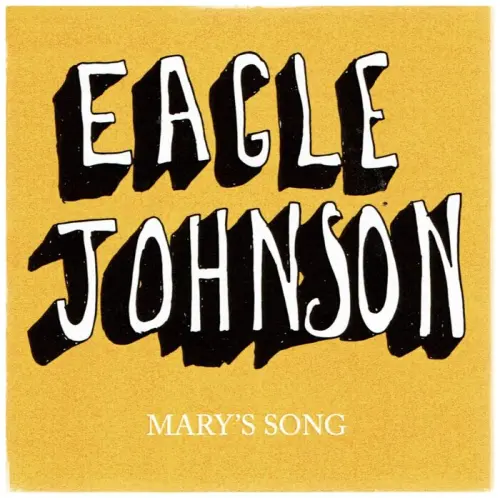 Marys SongEagle Johnson
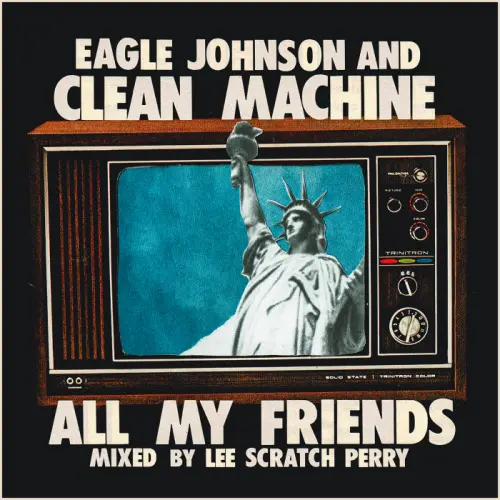 All My FriendsClean Machine
 MexicoClean Machine
 Part Time LoverEagle Johnson